
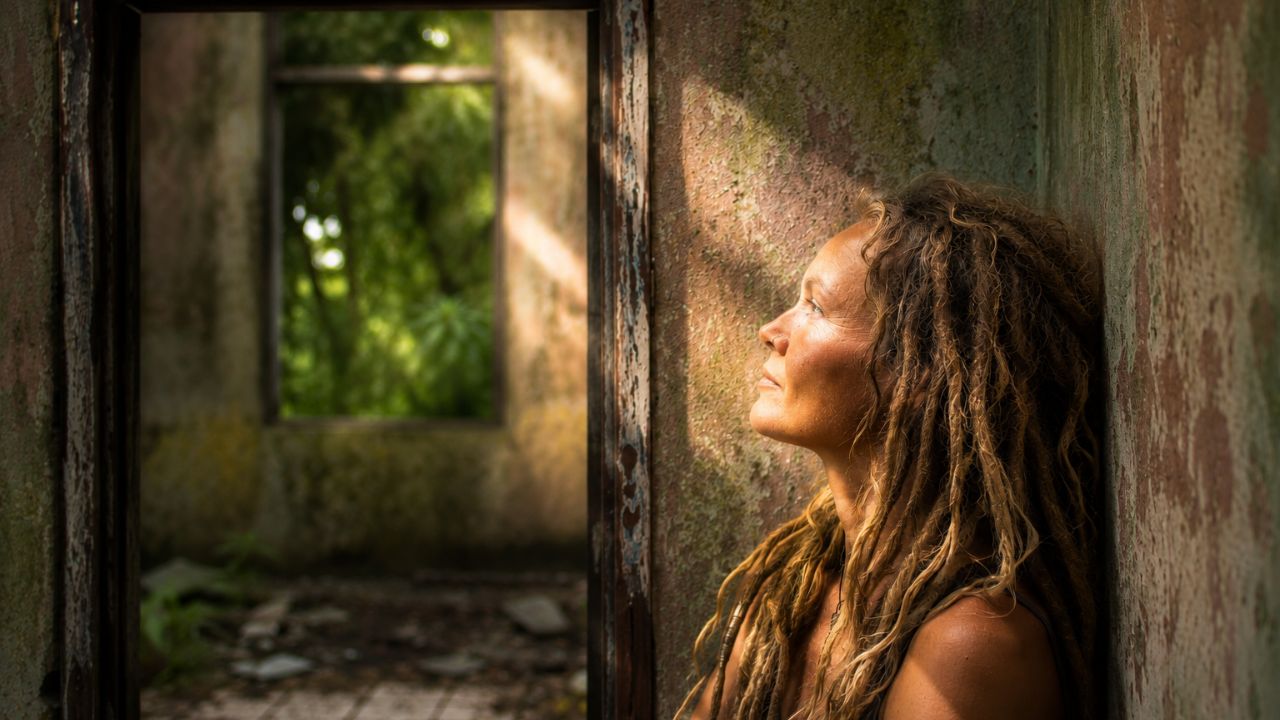
What twelve years of living and travelling across Africa taught me about simple living, finding enough, and the lost art of feeling human.
I grew up with more than enough.
A safe home in Germany. Food on the table. A beautiful forest nearby. Opportunities to learn, explore, and become whoever I wanted to be.
And yet, somewhere inside me, there was a constant hunger.
More experiences. More achievements. More freedom. More life.
I was so afraid of missing out on life that I almost missed the experience of being alive.
Twelve years of living and travelling across Africa didn’t give me all the answers. But they changed the questions I was asking.
And perhaps the most important one was this:
What if feeling truly alive isn’t about having more, but about participating more deeply in the life we already have?
Why Do We Feel Empty When We Have So Much?
We live in a world that offers us more possibilities than ever before.
More comfort. More information. More entertainment. More opportunities to connect, create, travel, and consume.
And yet, having more doesn’t necessarily mean feeling fulfilled.
We can have a full calendar and still feel disconnected.
A beautiful home and still feel restless.
A life filled with experiences and still wonder whether we’re really living.
I know that feeling.
For much of my life, I was constantly reaching for something else.
If I enjoyed something, I wanted more of it. If I achieved something, I immediately looked toward the next goal. If I travelled somewhere beautiful, I wanted to know what was waiting around the next corner.
At sixteen, my relationship with that inner hunger took a painful turn. I nearly starved myself to death.
From the outside, my life seemed to contain everything I needed.
But inside, something essential felt unfed.
It took me years to begin understanding that feeling.
I wasn’t simply hungry for experiences or achievements.
I was afraid of reaching the end of my life and realizing I hadn’t truly lived.
So I tried to fit as much living into my life as possible.
And slowly, I began to notice the paradox.
The more I tried to get out of life, the less I was actually experiencing it.
The Difference Between a Full Life and a Fulfilling Life
We often confuse being full with being fulfilled.
But they’re not the same thing.
A full stomach doesn’t necessarily mean satisfaction.
A full schedule doesn’t guarantee meaning.
And a life filled with extraordinary experiences doesn’t automatically create a sense of being alive.
I used to be proud of how much I could accomplish.
If I could do ten things in a day, why not twelve?
If I visited a new place, I wanted to see everything.
If there was an opportunity, I didn’t want to miss it.
I was always trying to make the most of life.
But what did making the most of life actually mean?
More productivity?
More experiences?
More accomplishments?
Or could it mean being more deeply present for the things I was already doing?
I began to recognize how often I was trading now for soon.
I’ll feel better when this project is finished.
I’ll relax when I reach that destination.
I’ll be happy when I’ve achieved this next thing.
But when soon finally arrives, it’s called now.
And by then, I was often already chasing the next soon.
What 12 Years in Africa Taught Me About Abundance
In 2014, after another health crisis and my second operation on my uterus, I left my old life behind.
I wanted to explore a question that had fascinated me during my earlier journeys across Africa:
What does abundance actually mean?
In some rural communities, I had met people who lived with far fewer material resources than I had grown up with.
And yet, in certain moments, I experienced a kind of abundance that was difficult to describe.
Not abundance measured in money, possessions, or opportunities.
But in connection.
In belonging.
In the way people participated in each other’s everyday lives.
I want to be careful here.
Poverty isn’t romantic. Not having enough food, access to healthcare, or opportunities is not something to celebrate.
And Africa is not one culture or one way of living. The continent holds an extraordinary diversity of people, places, experiences, and realities.
But the encounters I had challenged something inside me.
I had spent much of my life learning to become independent.
To be capable.
To be self-sufficient.
To make my own decisions and create my own opportunities.
Those are valuable things.
But somewhere along the way, I began wondering whether I’d confused independence with separation.
Whether I had become so focused on building my own life that I had forgotten how deeply human life is connected to other lives.
Africa didn’t become my solution.
It became my mirror.
It helped me recognize things about myself that had been difficult to see from inside the world I knew.
Simple Living Isn’t About Having Less
When we talk about simple living, we often think about minimalism.
Owning fewer things.
Living in a smaller home.
Having fewer commitments.
Escaping the noise of modern society.
And while those choices can be meaningful, I’ve come to understand simple living differently.
For me, it’s not primarily about reducing the number of things in my life.
It’s about changing my relationship with them.
Cooking with what is available.
Doing things with my own hands.
Living closer to nature.
Being involved in the everyday processes of my life instead of only consuming the results.
Sometimes these things take longer.
Sometimes they’re less convenient.
And they’re certainly not always easy.
But they invite me to participate.
To notice.
To use my senses.
To become involved in what is actually happening.
I began to wonder whether some of the convenience we work so hard to create also removes us from experiences that once connected us to everyday life.
Not because convenience is bad.
But because we rarely ask what we might be losing when we remove every bit of effort, friction, or involvement.
Maybe simple living isn’t about having less. Maybe it’s about participating more.
How I Started Learning to Feel Enough
During the COVID lockdown, I found myself staying in Morocco.
For someone who had spent years moving, exploring, and reaching outward, suddenly having fewer options was confronting.
There were places I couldn’t go.
Things I couldn’t do.
Experiences I couldn’t chase.
And without so many external distractions, I began noticing just how restless my inner world had become.
The same thoughts.
The same dissatisfaction.
The same feeling that something needed to change.
But this time, I couldn’t simply move on to the next experience.
So I started paying attention.
I observed my thoughts.
I practiced gratitude.
I began questioning whether every feeling of wanting something meant that something was actually missing.
And slowly, something changed.
Not necessarily my circumstances.
My relationship with them.
For the first time, I began experiencing a feeling of enough that wasn’t entirely dependent on what happened next.
I didn’t have to accomplish something first.
I didn’t have to reach another destination.
I didn’t have to fill every moment.
Sometimes, I could simply be there.
Of course, I still forget.
I still get restless.
I still find myself chasing the next thing.
But I now know that feeling enough is possible.
And that changed something fundamental in the way I live.
What My Husband Taught Me About Hunger and Fulfillment
My husband grew up with a very different experience of material abundance.
Resources were limited, and he knew what real hunger felt like.
Things I had taken for granted growing up weren’t always available to him.
And yet, I was fascinated by his sense of connection and belonging.
One of the simplest things he taught me was:
“It’s okay to be hungry.”
At first, that might sound strange.
But I began understanding it beyond food.
Not every desire needs to be satisfied immediately.
Not every uncomfortable feeling means something is wrong.
And not every moment of wanting more requires us to go and get more.
I had spent years trying to make sure I was always full.
Full of food.
Full of experiences.
Full of accomplishments.
Full of possibilities.
But perhaps fulfillment doesn’t come from eliminating every feeling of hunger.
Perhaps it comes from knowing the difference between what we genuinely need and what we have simply become accustomed to wanting.
Feeling full and feeling fulfilled are two very different things.
Why Modern Life Makes It Hard to Recognize Enough
One of the strange things about modern life is that so much of it is designed to continue indefinitely.
There’s always another video.
Another message.
Another opportunity.
Another product.
Another goal.
Another piece of information.
We can keep working, scrolling, comparing, and consuming long after we’ve stopped enjoying it.
And none of these things will necessarily tell us when we’ve had enough.
Social media won’t suddenly announce:
You’ve seen enough. Go outside.
That decision belongs to us.
And I think this is where intentional living becomes important.
Not as another self-improvement project.
Not as a perfect routine.
But as the ability to notice what is happening inside us before automatically reaching for something outside.
Am I actually hungry?
Am I tired?
Am I lonely?
Do I need more information, or do I need quiet?
Do I want another experience, or do I want to be more present for the one I’m already having?
Sometimes the answer is to do more.
Sometimes it’s to do less.
And sometimes it’s simply to stop long enough to recognize that, for this moment, we have enough.
How to Feel Alive Again Without Changing Your Entire Life
People sometimes imagine that reconnecting with life requires a dramatic decision.
Quitting a job.
Selling everything.
Moving abroad.
Starting over.
My own journey took me across Africa, but I don’t believe everyone needs to follow a similar path.
The things I’ve learned can begin much closer to home.
Stop Trading the Present for the Future
Notice how often you’re waiting for something to be finished before allowing yourself to enjoy life.
A project.
A difficult week.
A financial goal.
A period of uncertainty.
There’s nothing wrong with working toward the future.
But we don’t have to postpone our entire experience of being alive until we get there.
Ask What You’re Actually Hungry For
Before reaching for more, pause.
What are you hoping this next thing will give you?
Recognition?
Rest?
Connection?
Freedom?
A feeling of being enough?
Sometimes the thing we’re reaching for isn’t the thing we truly need.
Allow Life to Have Natural Limits
Living with solar power has taught me this in a surprisingly practical way.
Some mornings, there isn’t enough sunlight to charge my battery.
My laptop has to wait.
I could buy more equipment to make sure that never happens.
Or I can sometimes take my dog for a walk on the beach.
And discover that nothing terrible happens when I stop.
Not every limitation needs to be eliminated.
Sometimes a limitation makes room for something we wouldn’t otherwise have experienced.
Participate in Your Everyday Life
Cook something.
Spend time outside.
Have a conversation without needing to accomplish anything.
Notice the people around you.
Become involved in the ordinary processes of your life.
Not because every moment needs to be extraordinary.
But because ordinary moments make up so much of our existence.
Practice Recognizing Enough
One idea I encountered in a book about shamanic traditions stayed with me.
Before taking something from a plant, ask permission. Take only what you need for today. And give thanks.
I began wondering what would happen if I brought that attitude into other areas of my life.
Food.
Money.
Work.
Information.
Experiences.
Time.
Instead of constantly asking:
How much can I get?
What if I sometimes asked:
How much do I actually need?
The Lost Art of Feeling Human
For a long time, I carried something inside me that felt like a black hole.
An endless hunger.
A fear that no matter how much I experienced, it would never be enough.
That feeling hasn’t disappeared forever.
I still get caught up in work.
I still rush.
I still forget to appreciate what’s right in front of me.
But the black hole doesn’t feel quite so black anymore.
It’s as though somewhere along the way, a little window opened.
And light came in.
What I’ve learned through twelve years of living and travelling across Africa isn’t that we should stop wanting things.
Desire is beautiful.
Curiosity is beautiful.
Creativity, ambition, and the wish to explore are beautiful parts of being human.
But perhaps the art is knowing when to reach for more…
and when to recognize enough.
To enjoy what we already have.
To participate in our lives rather than constantly trying to improve them.
To be connected to ourselves, to other people, and to the world around us.
Maybe the lost art of feeling human isn’t something we need to learn from scratch.
Maybe it’s something we need to remember.
We don’t always need more life. Sometimes we need to be more present for the life we already have.
👉 Discover the Free Your Soul Retreats: www.lena-wendt.com
Watch the Full Film: I Spent 12 Years in Africa to Learn How to Feel Human Again
This article is based on my personal journey and the reflections I share in my cinematic YouTube film, I Spent 12 Years in Africa to Learn How to Feel Human Again.
🎬 Watch the full film on YouTube
Through Afrimind, I share stories and reflections from my life in Africa about what it means to feel alive, live intentionally, and reconnect with ourselves and the world around us.
If these questions resonate with you, I invite you to explore my books, films, and retreats.
Because perhaps the most interesting journey isn’t toward a life with more of everything.
It’s toward a life we can actually feel.
Peace and love from West Africa
Frequently Asked Questions
How can I feel human again?
Feeling human again can begin with reconnecting to your body, your surroundings, and the people in your life. Instead of constantly searching for more stimulation or achievement, create opportunities to participate in everyday experiences and notice what genuinely matters to you.
What does simple living mean?
Simple living means making intentional choices about how you spend your time, attention, energy, and resources. It isn’t necessarily about owning less. It can also mean being more involved in everyday life and recognizing when you have enough.
Why do I feel empty even though I have everything I need?
Material comfort doesn’t automatically satisfy emotional needs such as connection, belonging, purpose, or feeling understood. Persistent emptiness can have many causes, and professional support can be helpful when it becomes difficult to manage.
What is the difference between feeling full and feeling fulfilled?
Feeling full can describe having enough of something, while feeling fulfilled involves a deeper sense of meaning, connection, or satisfaction. More experiences, possessions, or achievements don’t automatically create fulfillment.
Can intentional living help me feel more alive?
Intentional living can help you become more aware of your choices and how they affect your everyday experience. It encourages you to focus on what matters rather than automatically responding to every external demand.
Do I need to move abroad to live a simpler life?
No. Simple living doesn’t require moving abroad or making dramatic lifestyle changes. It can begin wherever you are, through small changes in how you use your time, relate to other people, and participate in everyday activities.